

SL28
SL28 was originally selected for drought resistance. The long dry seasons in Kenya are difficult for many crops; SL28’s developed root system allows it to continue to thrive in these adverse conditions. SL28 also showcases a great deal of ‘rusticity’, meaning that trees can be left untended for many years and continue to produce. For this reason, trees in Kenya are some of the oldest we’ve seen on our coffee travels, often over 70 years old, with wide and heavy trunks growing over 2 metres tall.
SL28 was selected by Scott Laboratories, renamed as Kenya’s National Agricultural Laboratories, or NARL, in the post-colonial period. SL28 was selected from a selection of seeds found on a trip to Tanzania in the early 1930’s, looking specifically for drought resistant genetics. These trees were closely related to the French Mission Bourbon planted here, but had adapted well to the dry conditions in the Moduli district of Tanzania, then known as Tanganyika. Once planted in Kenya, these trees continued to showcase resistance to drought, but one specific section also grew tall and sturdy, and yielded very well. It was these trees that were selected as SL28, the 28th selection from Scott Laboratories research.
-v1763715147946.jpg?900x1350)
The Modern Era
The high yield, sturdiness and drought resistance of SL28 led to its widespread adoption across the country, and even before the era of speciality coffee, Kenyan coffee became known for its quality, and its distinct ‘fruity’ character. These attributes were not the only characteristics of SL28, however. As SL28 trees grew older, and many diseases became more prevalent in Kenya, SL28 became much more susceptible to fungal diseases such as leaf rust, and pests such as coffee berry borers. This means in modern Kenyan coffee, SL28 has begun to be superseded by disease resistant hybrids, often Ruiru 11 and Batian, even grafted directly on to old SL28 trees’ sturdy and developed root systems. The remaining SL28 trees require a great deal of fungicide and pesticide in order to thrive, so the cost of production of these trees is significantly higher than their modern hybrid counterparts.
-(1)-v1763715454212.jpg?900x1125)
However, in some areas, such as the area of Kirinyaga where the New Ngariama cooperative is based, the SL28 stock is much newer, and less susceptible to pests and diseases due to the high altitude. It is here that we see some of the highest concentrations of SL28 in Central Kenya. The renown of SL28, and its distinctive flavour profile, has also led to it’s adoption in other parts of the world, first in other East African countries, especially Tanzania and Uganda, and then further afield, especially in Costa Rica, where it reached the hands of Allan Oviedo at his Don Joel micro-mill.
-v1763717262287.jpg?1200x960)
Kiamugumo
The small region in Kirinyaga that the Kiamugumo station serves, surrounding the village of Ngariama, is mainly a tea-growing area, so most of the coffee plant stock is rather new. The region is known for very high quality of both tea and coffee; being planted somewhat later than neighbouring regions means soils haven’t been tired out by years of conventional agriculture, with its sprays and chemical fertiliser. We have visited the region several times, most recently in February of this year. Here, it is clear to witness the density of both coffee and tea plantation in the lush green landscape, enabled by the rich volcanic soils, relatively undisturbed by intensive conventional agriculture. North Eastern Kirinyaga is home to some of our favourite Kenyan coffees; Kiamugumo is run by the New Ngariama Farmer’s Cooperative Society, who also own the Kamwangi and Kainamui stations, where we have purchased several lots in the past.
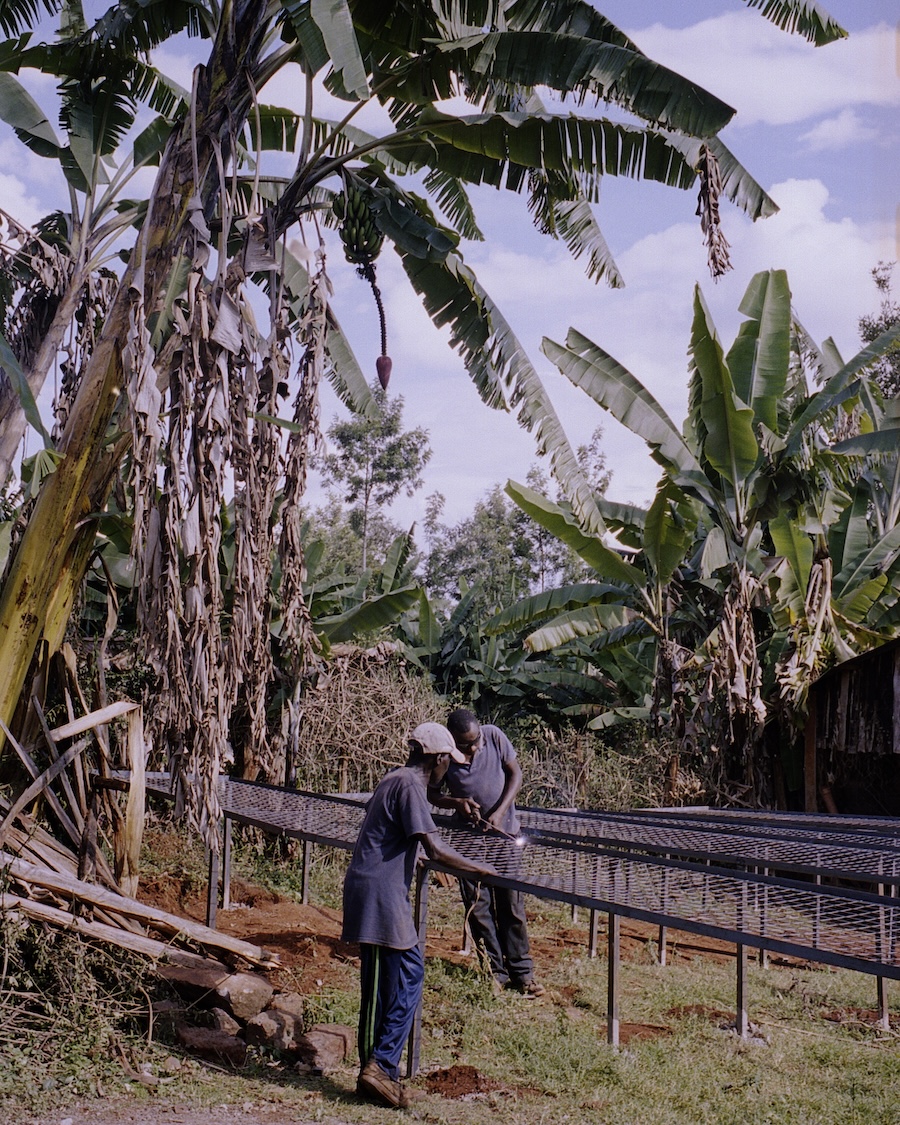
Over the past few years we have continually chosen coffees from this micro-region on blind cupping tables. We continue to focus our work this year on the region. Also near to Ngariama are the Thirikwa cooperative, who own Gakuyuini, and the Rungeto Cooperative who own Kii, Kiangoi and Karimikui, also names very familiar to us at La Cabra. This tiny area continues to impress with its quality, much of the area was planted with coffee just before the rise of hybrid varietals in Kenya, meaning that 99% of the farmers that deliver to Kiamugumo grow SL28 and SL34, with only about 1% using rust-resistant varietals like Ruiru 11 or Batian.
This peaberry selection is reminiscent of fresh redcurrant, rich brown sugar and black tea.
Don Joel
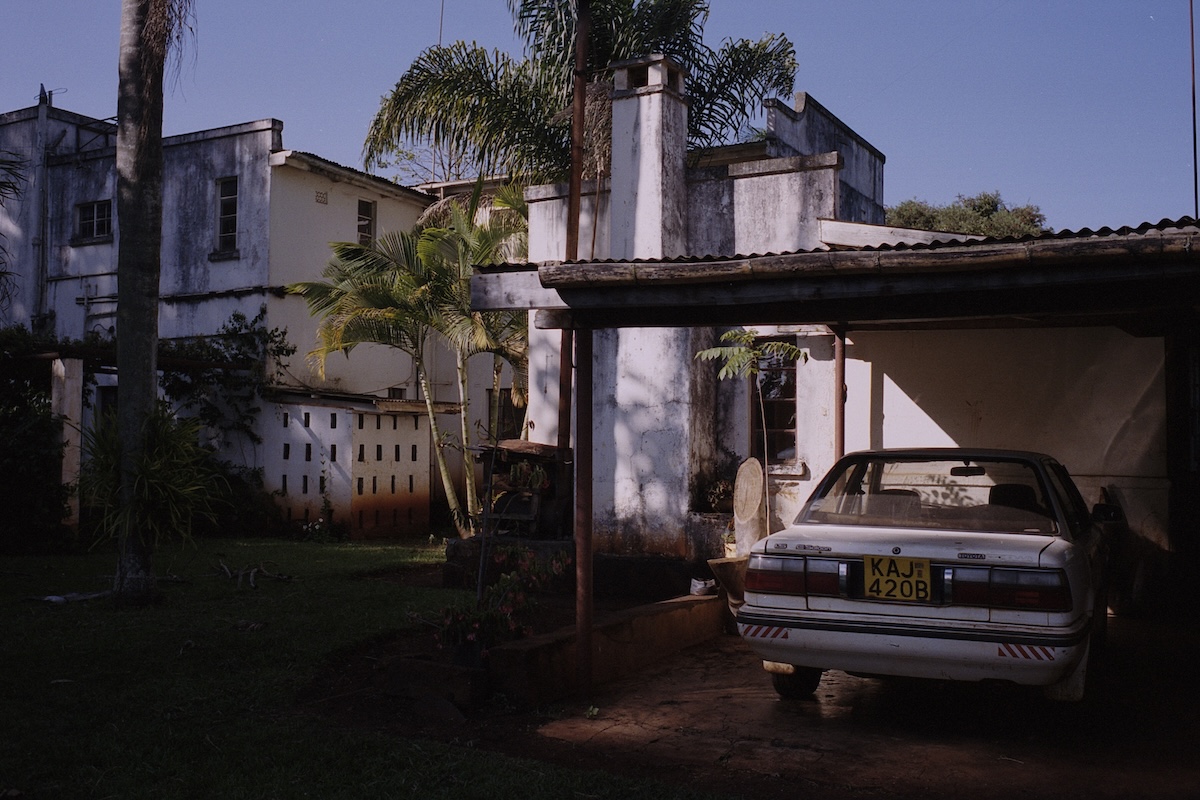
Allan Oviedo is a second generation coffee producer, inheriting his land from his father Joel Oviedo around 20 years ago. Joel’s land was split in two, with half going to Allan, and half to his brother, Allan’s uncle. Initially, he was selling coffee cherry to a local mill, receiving a very low market price. This meant he had to take shifts as a taxi driver in San Jose to make ends meet, saving money to reinvest into the farm. Allan made many changes on the farm, aiming to improve quality of life for his family. Like many in Costa Rica during this time, Allan’s aim was to process his own coffee, constructing a micromill. He eventually accomplished this, naming his mill for his father, Don Joel.
-v1763715750120.jpg?900x1125)
Allan has heavily invested in quality since, winning several awards in the Costa Rican Cup of Excellence between 2017 and 2023, a 3rd place in the honey/natural category in 2024, and a fourth place in the experimental category this year. This success has allowed Allan to continue to invest, even purchasing the rest of his father’s land back from his uncle and planting more Villa Sarchi, Typica and SL28. Allan’s continuing success is a testament to his methodic and detail-focussed approach, allowing him to continue to increase the quality of the coffee he produces, as seen in his consistent placings in the Cup of Excellence.
This year, many of Allan’s lots ended top of our rounds of cupping together with our partners from Exclusive Coffees in Costa Rica. We have met and cupped together with Allan and his family at the Exclusive lab in San José, always impressed by his professionalism, and of course by the quality of the coffees. Last year, Allan was able to visit us in Copenhagen during the World of Coffee event, a welcome return visit. This lot, a white honey process SL28 varietal, stood out for its rich sweetness and depth of flavour, lifted by a crisp and juicy acidity.
The flavours we find are driven by the varietal, reminiscent of the Kenyan profile, with crisp red berries and a molasses sweetness.
-v1763715920520.jpg?900x1125)
We hope you enjoy this month’s exploration of the SL28 varietal, one of the most iconic and characterful we have come across in our years in coffee.
SL28 in Kenya provides an interesting dilemma; do we continue to chase the utmost quality, using a greater deal of chemical inputs in order to maintain the stock of pure SL28 trees, or allow wider sustainability concerns to push towards more resistant hybrid varietals like Ruiru? Some individual projects, such as our friend Boyce Harries, owner of the Chania and Oreti Estates, are aiming to keep growing pure SL28 in a more environmentally conscious way, while maintaining their excellent quality and distinct character.
One thing is for sure, having tasted several pure Ruiru lots, and many SL lots grown around the world, the varietal itself is a big contributor to the classic ‘Kenya’ character we have come to enjoy. But is it worth the greater impact from chemical inputs, and the greater cost of production to the producer?