product background
Skip to product information

Ethiopia

Oma Washed

Oma Washed

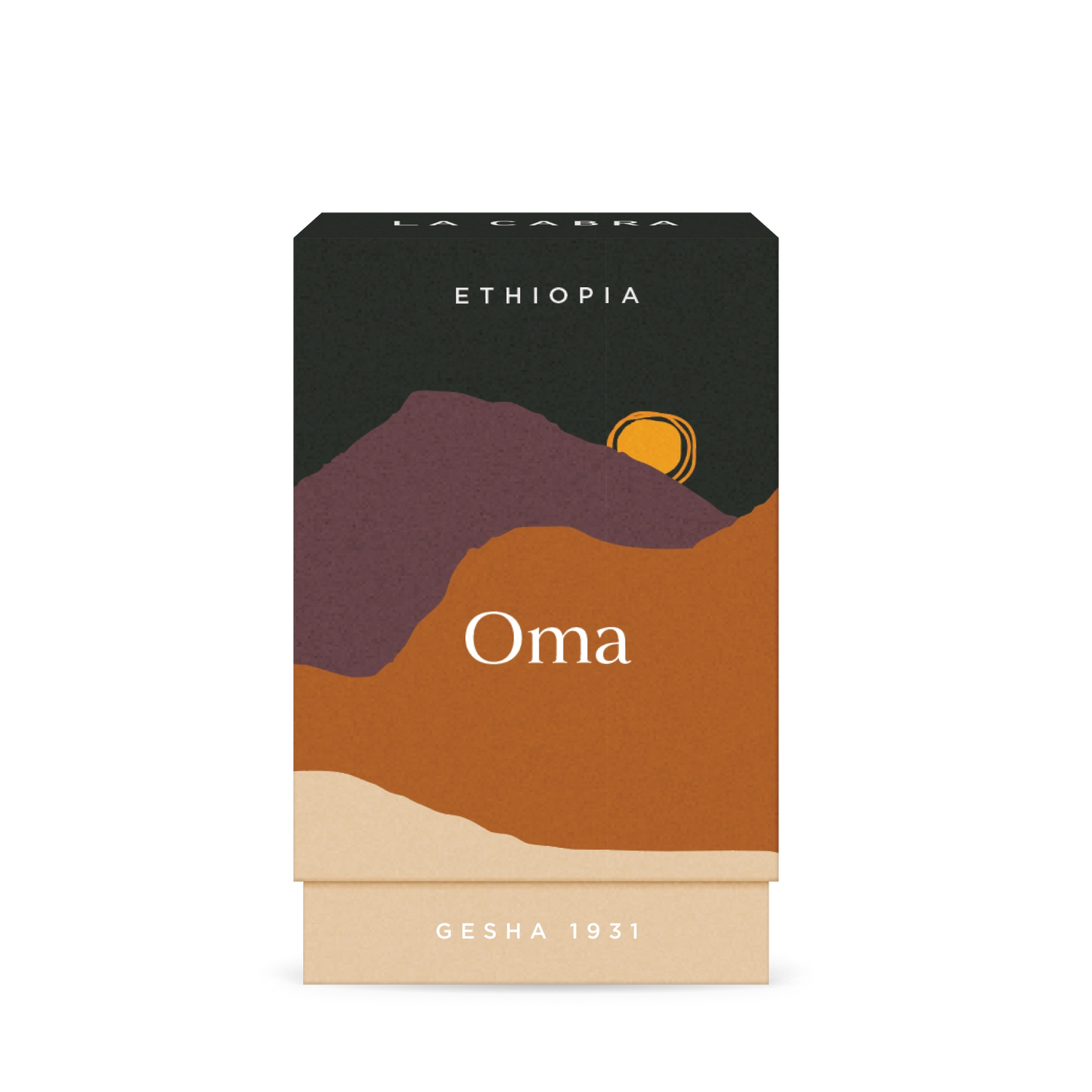
A floral Gesha 1931 grown on the Oma plot of Gesha Village. The washed process highlights its unique qualities, producing a floral cup with bright acidity and clear flavour definition.

Amount

Regular price Kr. 229,00 DKK
Kr. 229,00 DKK Regular price Sale price
incl. vat/tax
View full details

About

Coffee Expression The washed process adds rich complexity to the floral and fresh character Geisha coffees are known for.

Producer Produced by Gesha Village in the Bench Maji zone of Ethiopia.

Whole Bean Coffee / Both for filter and espresso

Technical Data

Producer Gesha Village

Region Bench Maji

Altitude 2000 masl

Varietal Gesha 1931

Process Washed

Harvest January 2025

Brewing Advice

Water is one of the most critical components of an excellent coffee experience. We recommend using mineral water of a soft Total Dissolved Solids count, ideally below 150 ppm. 

Rested coffee During the resting process, harsh and astringent flavors, which can even be perceived as a ‘roast’ character, soften out, allowing a clearer and brighter expression of the coffee’s character to shine.  

We recommend resting our coffees for at least 10 days after the roast date, and we often find excellent results, especially for particularly dense coffees, beyond 6 weeks.

Brewing Our straightforward approach to coffee carries over into brewing. We recommend our roasted coffee for all brew methods, regardless of whether it is immersion, percolation or espresso. We believe that there is one correct way to roast a single coffee, roasting lightly, in such a way as to release its innate qualities and showcase its quality. Learn more about different brewing techniques and specific brew guides here.

Shipping & Delivery

· Free shipping available

· Ships within 1-3 days from Denmark

· More info

Gesha Village

Gesha Village lies in the Bench Maji zone of South Western Ethiopia, not far from the border with South Sudan. This area, in the high altitude humid forests where the Great Rift Valley passes into South Sudan, is thought to be the birthplace of Arabica coffee, and is still home to great genetic diversity. Here at Gesha Village however, one varietal sits in the spotlight; Geisha.

Adam Overton and Rachel Samuel first travelled to Ethiopia in 2007 to make a documentary about its unique method of coffee production, and fell in love with the country. They decided during that short trip that they would eventually move to the country to start producing coffee themselves. They found a 471 hectare plot of land in Bench Maji, further west than we normally find specialty coffee in Ethiopia, in a remote area of untouched high altitude forest. The wild forest remained as coffee was planted, maintaining as much as possible of the biodiversity so crucial to the Ethiopian mode of production, while also providing ample shade for the fragile Geisha trees.

This isn’t just any Geisha however.

Gesha Village is located only around 20 km from the Gori Gesha forest, where the hallowed varietal of the same name was first isolated by British researchers in 1931. When preparing Gesha Village, the team behind the project trekked into the forest and gathered seeds from the wild coffee trees growing there, selecting those that genetically resembled the original 1931 expedition Geisha.

Oma

This lot of Gesha 1931 was grown on the Oma plot of Gesha Village, reaching up to 2040 masl. The cherries were harvested at the end of January 2025 and underwent a careful washed process.

Following the harvest, the cherries are pulped and allowed to ferment naturally for 12-36 hours before being thoroughly washed. The coffee are then dried carefully on African raised beds, preserving the clarity and delicate character that defines this lot.

The washed process at Gesha Village highlights the intrinsic qualities of the Gesha 1931 variety, allowing the unique terroir of the Oma lot to shine through.

You might also like